Dietrich Bonhoeffer
A story of fortitude · About 3 minutes
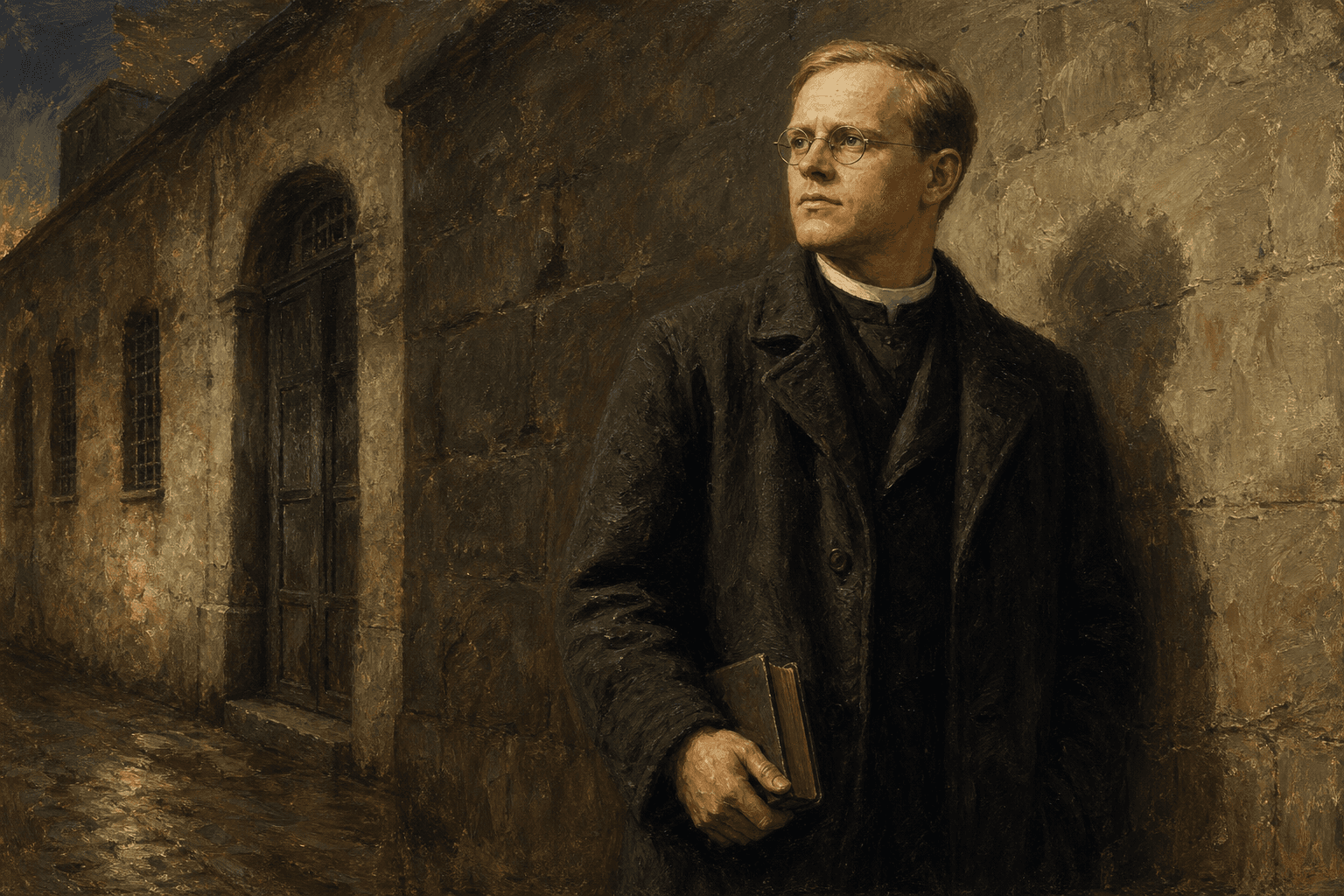
Dietrich Bonhoeffer was twenty-seven when Adolf Hitler came to power in Germany. A theologian who had already earned his doctorate, Bonhoeffer could have spent his life in lecture halls and libraries. Instead, he watched the new regime press its demands onto the church.
He had seen injustice before. Years earlier, while studying in New York, Bonhoeffer had attended a Black church in Harlem, where he learned from people who knew what it meant to suffer for their dignity. That experience sharpened his conviction that faith without action was empty.
Within a year of Hitler's rise, the Nazi government required Protestant pastors to swear loyalty to the Führer. Many did. Bonhoeffer did not. He helped form the Confessing Church, a movement of Christians who declared that their allegiance belonged to God alone, not to the state. The Nazis shut down his seminary. He opened another, this time underground, and kept training pastors in secret. In 1937 he published The Cost of Discipleship, a book that called cheap grace the deadly enemy of the church and insisted that real faith cost something.
In 1939, with war spreading across Europe, friends in America arranged a safe teaching post for Bonhoeffer in New York. He crossed the Atlantic. Within weeks, he turned around and sailed back to Germany. He wrote to a friend that he could not rebuild the church from the comfort of a foreign country while his own people suffered. He had to share what they were facing.
That decision cost him everything. Bonhoeffer joined the resistance, using his church contacts abroad to pass intelligence out of Germany and helping Jews escape across the border. When the Gestapo uncovered his connection to a plot against Hitler, they arrested him in April 1943. For two years he waited in prison, writing letters to his family and counseling fellow prisoners.
On the morning of April 9, 1945, he was hanged at Flossenbürg concentration camp. A camp doctor who witnessed it later wrote that Bonhoeffer knelt and prayed before he walked to the scaffold. Three weeks later, the war in Europe ended.
His last reported words were, "This is the end. For me, the beginning of life."
The Moral of the Story
Fortitude is the strength to do what is right when everything around you makes it easier to stay silent. Dietrich Bonhoeffer chose the harder path again and again: speaking when others were quiet, returning when he could have stayed safe, and standing by his convictions even at the cost of his own life. True courage is not the absence of fear; it is the decision to act in spite of it.